
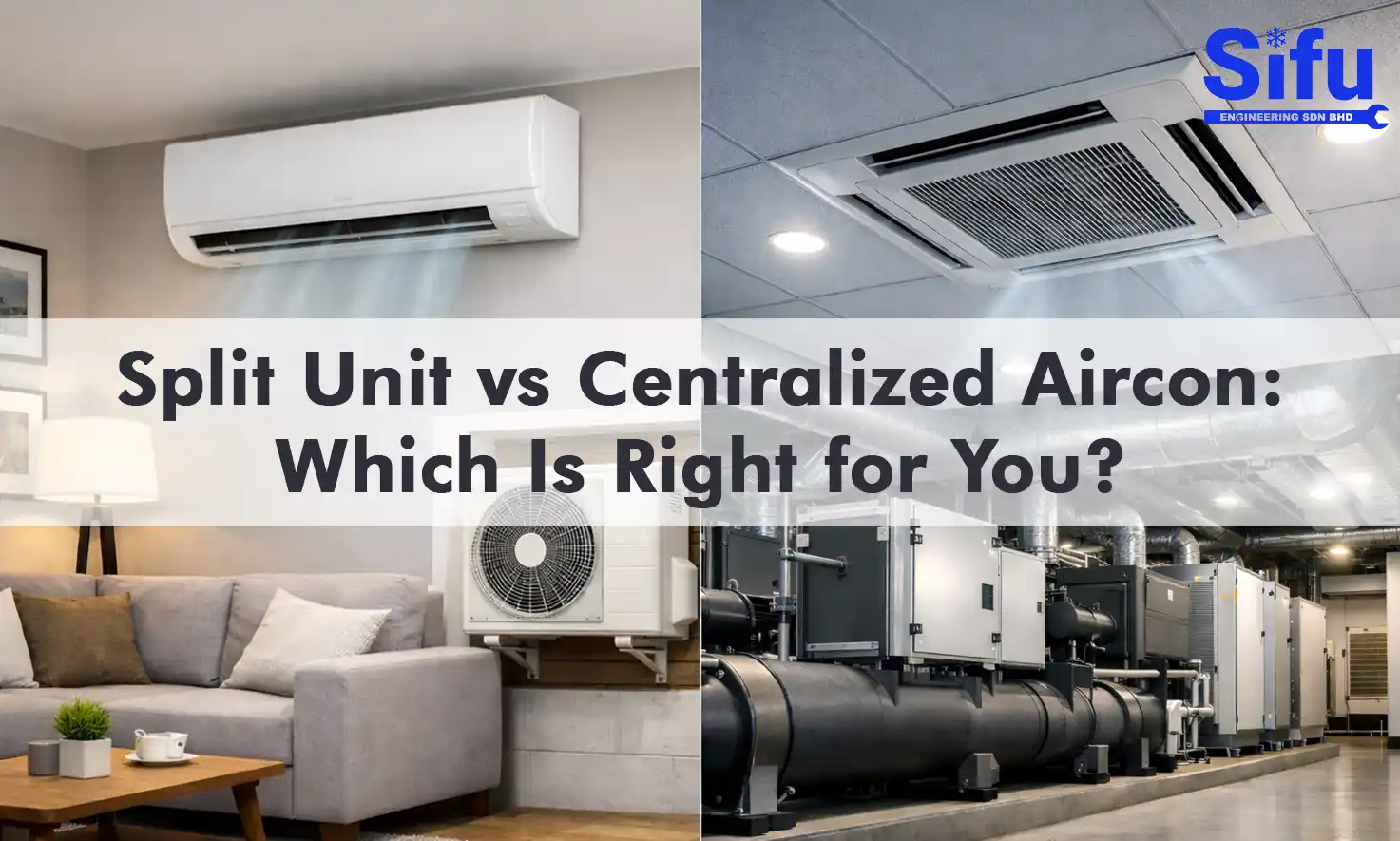
Choosing the right air conditioning system for your Malaysian home or business isn’t just about staying cool, it’s about making a smart investment that balances comfort, efficiency, and cost. With Malaysia’s tropical climate keeping temperatures consistently high throughout the year, your aircond system will be working hard, so getting this decision right matters.
If you’re torn between a split unit and centralized air conditioning, you’re not alone. Both systems have their champions, and both can keep you comfortably cool. But which one actually makes sense for your space? Let’s break it down so you can make an informed decision without the sales pitch.
Understanding the Basics: What's the Difference?
Before we dive into the nitty-gritty, let’s make sure we’re on the same page about what these systems actually are.
What Is a Split Unit Aircon?
A Split Unit Aircon consists of two main components: an indoor unit (the bit you see on your wall) and an outdoor compressor unit. They’re connected by refrigerant pipes and electrical cables. You’ll see these everywhere in Malaysia: in homes, offices, shops, and restaurants.
What Is Centralized Aircon?
Centralized air conditioning is a whole-building solution. One powerful outdoor unit connects to multiple indoor units or air ducts that distribute cool air throughout your entire property. Think of it as a centralised cooling hub that manages the temperature of your entire home or office from one system.
Split Unit vs Centralized Aircon: How They Compare?
Malaysia’s climate is unique, and it plays a massive role in how your aircond system performs. With average temperatures hovering between 25°C and 35°C year-round, high humidity levels (often 70-90%), and minimal seasonal variation, your cooling system will be running regularly, not just during a brief summer season.
Now, let’s compare these two options across the factors that actually matter to Malaysian homeowners and business owners.
1. Coverage & Cooling Style
When it comes to cooling coverage, split unit and centralized air conditioning work very differently.
If you want room-by-room comfort and flexibility, split units are the smarter choice. If you want uniform cooling for a large home or office, centralized air conditioning wins.
Split Unit Aircon – Best for Targeted Cooling
A split unit air conditioner is ideal if you only need to cool certain rooms such as bedrooms, living rooms, study rooms, or offices. Each indoor unit cools one specific area, giving you zoned cooling control. This means you can switch on the aircond only where and when you need it. For Malaysian households where different family members use different rooms at different times, this flexibility is extremely practical.
Centralized Aircon – Best for Whole-Home Comfort
A central aircond system is designed to cool multiple rooms or the entire property at once. Cool air is distributed evenly through ducts or multiple indoor units connected to one powerful outdoor unit. This makes it perfect for large homes, luxury properties, semi-D or bungalows, and commercial buildings where consistent temperature throughout the space is important.
2. Installation & Upfront Costs
Cost is one of the biggest deciding factors for Malaysian homeowners and business owners.
If you’re budget-conscious or want a cost-effective setup, split units are clearly more affordable. Centralized aircond systems require a bigger upfront budget but deliver premium comfort and aesthetics.
Split Unit Aircon – Lower Initial Investment
Installing a split unit air conditioner is generally much cheaper and simpler. You only need drilling, piping, and wiring work. There’s no need for major renovation or ductwork. This makes it highly suitable for apartments, terrace houses, shop lots, and offices. You also have the option to install one unit first and add more later as your budget allows.
Centralized Aircon – Higher Installation Cost
Central air conditioning systems involve more complex installation. Ducting, ceiling works, trunking, and detailed planning are usually required. This often means higher labour, materials, and engineering costs. Central systems are usually more worthwhile when planned during house construction or major renovation, not as a quick add-on.
3. Energy Efficiency & Running Costs
Running costs matter because your aircond will likely be running daily in Malaysia.
For typical Malaysian homes and selective room usage, split units are usually more cost-efficient. Central systems become more efficient only when you truly need consistent whole-home cooling.
Split Unit Aircon – Energy Efficient for Everyday Malaysian Use
Modern inverter split units are highly energy-efficient and are designed to reduce electricity usage by adjusting compressor speed. Since you only cool occupied rooms, you avoid wasting electricity on empty areas. This is why split unit aircons are generally cheaper to run for most Malaysian homes.
Centralized Aircon – Efficient Only When Used Fully
Central air conditioning can also be efficient, especially modern VRV/VRF systems with zoning functions. However, if you are cooling the entire property all the time, expect higher electricity bills. There is also some energy loss through ducting.
4. Maintenance & Durability
Regular air conditioning servicing is essential due to high humidity levels, rapid dust accumulation, and the demands of year-round operation.
If you want lower maintenance cost, easier servicing, and fewer complications, split units are more practical. Centralized aircond is reliable but needs professional upkeep.
Split Unit Aircon – Easier & Cheaper to Maintain
Servicing a split unit is straightforward. Cleaning filters, servicing coils, and gas refilling are generally affordable. If one unit breaks down, only that room is affected; the rest of your home or office remains comfortable.
Centralized Aircon – Requires Professional Maintenance
Central air conditioning systems involve more complex installation. Ducting, ceiling works, trunking, and detailed planning are usually required. This often means higher labour, materials, and engineering costs. Central systems are usually more worthwhile when planned during house construction or major renovation, not as a quick add-on.
5. Aesthetics & Home Design
Cooling performance matters but how the system looks in your home also plays a role.
If design and aesthetics are a priority, central aircond provides the most premium visual experience. Split units remain attractive but are more noticeable.
Split Unit Aircon – Visible but Modern
Split units are mounted on walls or ceilings, so they are visible. However, today’s designs are sleek, modern, and blend nicely into most Malaysian interiors. Ceiling cassette types also offer a cleaner look.
Centralized Aircon – Clean, Premium & Seamless
Central systems are popular for luxury homes, Split units are mounted on walls or ceilings, so they are visible. However, today’s designs are sleek, modern, and blend nicely into most Malaysian interiors. Ceiling cassette types also offer a cleaner look.
Making the Decision: Practical Recommendations

For Typical Malaysian Homes (Terrace/Apartment)
Recommendation: Split Units
Install inverter split units in bedrooms, living room, and any other frequently used spaces. This gives you excellent cooling where you need it, manageable costs, and the flexibility to expand later.

For Larger Homes (Semi-D/Bungalow)
Recommendation: Hybrid Approach or Central System
Consider a central system if you have the budget and want whole-home cooling. Alternatively, use a hybrid approach: central system for common areas, individual splits for bedrooms.

For Commercial Spaces
Recommendation: Central System or VRV/VRF
Commercial properties benefit from central systems' efficiency, consistent cooling, and professional appearance. VRV/VRF systems offer excellent energy efficiency and zone control.
Tips for Maximising Your Investment in Aircond
No matter which system you decide on, the tips below can help you get the most value from your air conditioning investment.
- Choose inverter technology: 30-50% more energy efficient than non-inverter models
- Size correctly: Undersized units work harder and cost more; oversized units cycle inefficiently
- Professional installation matters: Poor installation ruins even the best system
- Regular maintenance is non-negotiable: Neglected systems lose 5-10% efficiency annually
- Consider your ceiling height: Malaysian homes with high ceilings need more powerful units
- Factor in insulation: Better insulation means better efficiency for either system
- Check your electrical capacity: Ensure your home’s electrical system can handle your chosen aircond
Conclusion
Choosing between split unit and centralized air conditioning isn’t about finding the “best” system, it’s about finding the best system for you. For most Malaysian homeowners, split units offer the perfect balance of affordability, efficiency, and flexibility. They’re practical, proven, and perfectly suited to our climate and lifestyle.
Centralized air conditioning shines in larger properties, commercial spaces, or when you want that premium whole-home comfort and aesthetic. If you have the budget and the property to justify it, central systems deliver unmatched consistency and elegance. No matter which type of aircond you choose, invest in quality units, professional installation, and regular maintenance. In Malaysia’s demanding climate, your aircond isn’t a luxury, it’s essential for comfort, productivity, and quality of life.
Ready to find the perfect aircond solution for your space? Explore quality air conditioning systems and professional installation services at sifu.shop to keep your Malaysian home or business comfortably cool year-round.
Frequently Asked Questions (FAQs)
Is it true that centralized airconds are more expensive to run?
Generally, yes. Because they cool larger volumes of air and involve ducting (which has some “coolth loss”), they tend to use more power. However, modern VRV systems are very efficient and can be comparable to multiple split units if you are cooling a whole house.
Can I mix split units and centralized aircond in the same house?
Absolutely! Many Malaysian homeowners use a hybrid approach: central system or multi-split for common areas (living room, dining room), and individual split units for bedrooms. This provides consistent cooling in shared spaces whilst allowing individual temperature control in private rooms.
Which is more energy-efficient in Malaysia's climate: split unit or centralized aircond?
For typical Malaysian residential use, modern inverter split units are generally more energy-efficient because you only cool occupied rooms. Central systems are more efficient when you need to cool an entire large property simultaneously. Look for 4-star or 5-star energy ratings regardless of system type. Malaysian government’s Energy Commission provides energy labels to help you compare efficiency.
Do I need special electrical wiring for centralized aircon in Malaysia?
Yes, centralized conditioning systems require dedicated electrical circuits with appropriate amperage (typically 30-60 amps depending on system size). You may need to upgrade your home’s electrical panel and wiring. This is one reason why centralized aircond is best installed during construction or major renovation. Always hire a licensed electrician to assess and upgrade your electrical system before installation.
