
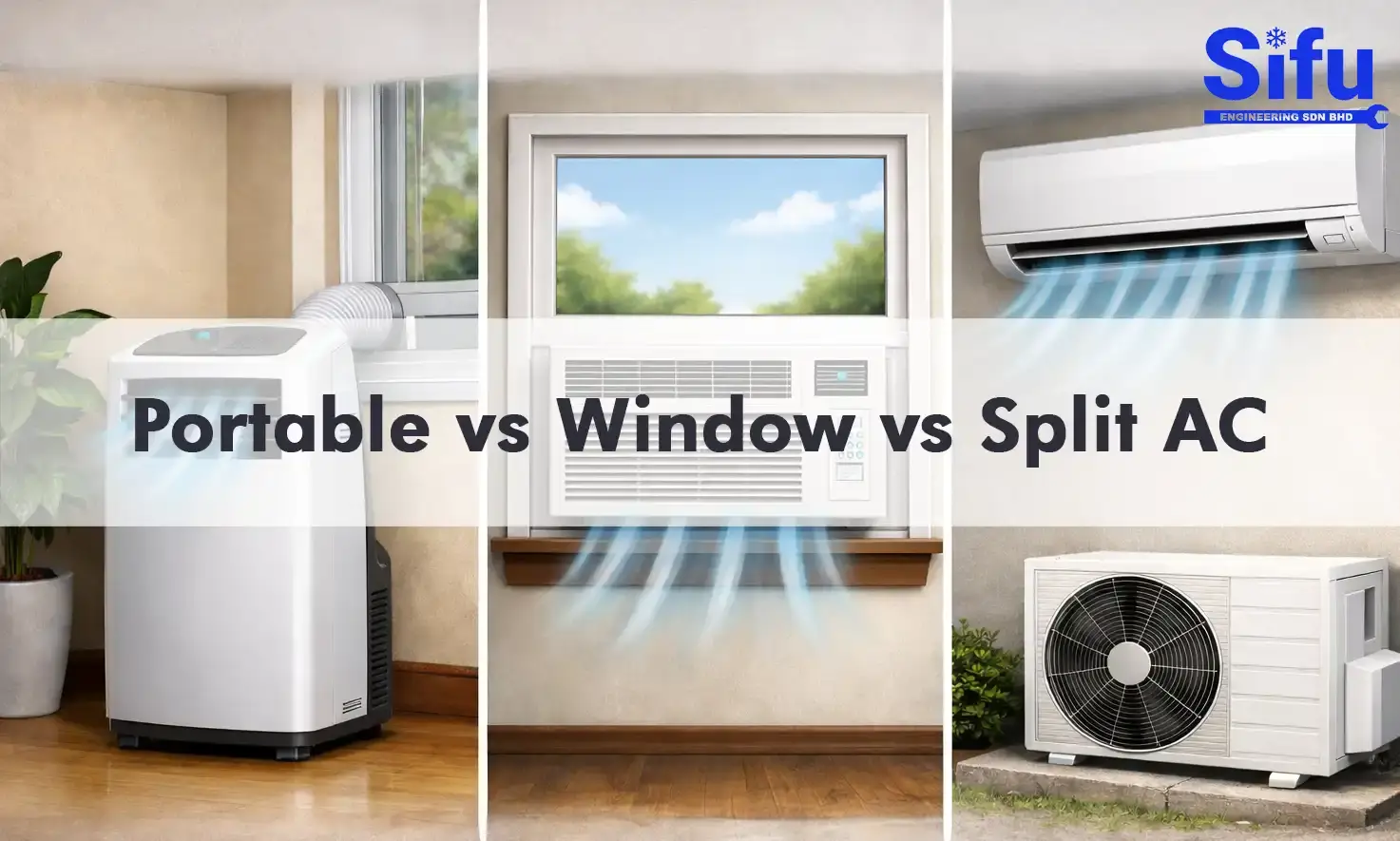
If you’re shopping for an air conditioner in Malaysia, you’ve probably seen three common options: portable, window, and split air conditioners. On paper, they all “cool the room” but in real Malaysian homes, the best choice depends on your space, lifestyle, and budget.
This comprehensive guide breaks down portable vs window vs split AC using practical criteria Malaysians care about: cooling performance, humidity handling, noise, installation constraints (especially condos and rented rooms), running cost, and maintenance. By the end, you’ll know which air conditioner is best for Malaysia and which one is best for you.
Quick Comparison: Portable vs Window vs Split AC
| Factor | Portable AC | Window AC | Split AC |
| Cooling strength | Moderate (best for small rooms) | Good (small–mid rooms) | Strongest (all room sizes) |
| Humidity control | OK (varies by model) | Good | Very good |
| Indoor noise | Highest | Medium-high | Lowest (compressor outside) |
| Installation | Easiest (vent hose to window) | Needs window slot / wall cut-out | Requires professional installation |
| Best for rentals | ✅ Yes | Sometimes | Depends on landlord/condo rules |
| Energy efficiency | Often lower | Medium | Best (especially inverter) |
| Maintenance | Filter + possible water handling | Filter cleaning | Filter + periodic servicing |
| Upfront cost | Low–mid | Low–mid | Highest |
| Long-term value | Medium | Medium | High |
How Each AC Type Works?
Before you compare prices or brands, it helps to know how each air conditioner type cools your room. The design affects how cold it feels, how noisy it is, and how easy it is to install in Malaysia.
Here’s the simple breakdown:
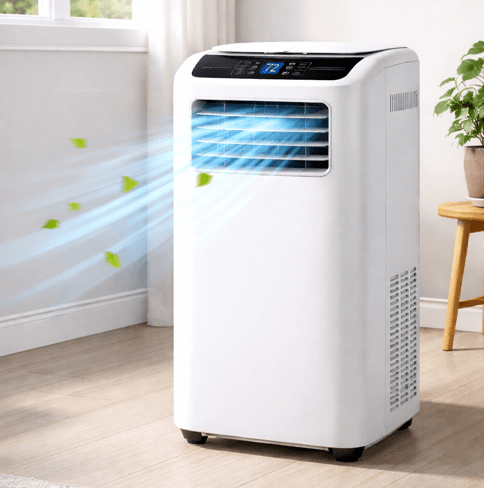
Portable Air Conditioner: “All-in-one” Cooling Inside the Room
A portable AC has the compressor and cooling components inside a single unit. It pulls warm air from the room, cools it, and pushes hot air out through an exhaust hose (usually to a window). Because the compressor sits inside the room, portable units tend to be noisier, and if the exhaust setup isn’t sealed properly, performance drops fast.
It’s the easiest option for renters and temporary setups, especially when drilling or permanent installation isn’t allowed.
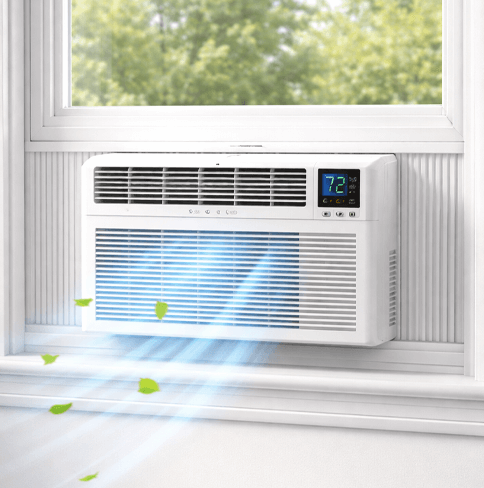
Window Air Conditioner: Compact Cooling Unit Mounted in a Window Slot
A window unit is a single box installed into a window slot or wall opening. It dumps hot air outside, cool air inside. It’s straightforward, often cheaper than split AC, and can be effective for smaller rooms.
Many modern condos don’t have suitable windows for this, and building rules may restrict exterior modifications.
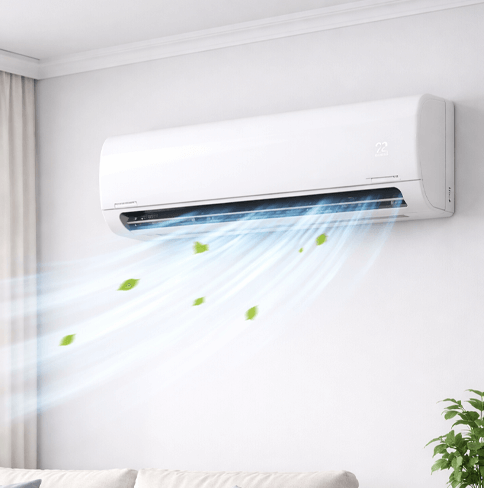
Split Air Conditioner: Indoor Unit + Outdoor Compressor
Split AC separates the indoor blower from the outdoor compressor. This is why split systems are usually quieter indoors, cool faster, and perform better over long daily usage. It also allows more advanced inverter technology and airflow designs.
It’s typically the best overall solution for comfort, especially in bedrooms and living rooms.
Cooling Performance: Which Feels Coldest in Malaysian Heat?
Malaysia’s humidity makes rooms feel warmer than the thermometer suggests. That’s why consistent cooling and good airflow matter.
Split AC: Best Cooling + Best Stability (Most Comfortable in Malaysia)
If you want the aircond that most consistently feels “properly cold” in Malaysian weather, split air conditioners usually come out on top. Because the compressor is placed outside, the indoor unit can focus on delivering steady airflow and maintaining temperature without the same level of heat buildup and noise you get with all-in-one designs.
A split air conditioner in Malaysia tends to feel more comfortable in spaces like:
- Master bedrooms (especially for long overnight use)
- Living rooms (where heat load is bigger)
- Family areas (more people = more heat)
- Rooms with sun exposure (particularly west-facing afternoon heat)
Window AC: Good Cooling, But Not Always as “Smooth”
A window air conditioner can absolutely cool a room well, especially if the unit capacity matches the room size. Many Malaysians still use window units effectively in smaller bedrooms and older homes designed for them.
However, compared to split systems, window airconds may feel less “even” because:
- Airflow distribution can be less consistent across the whole room
- Temperature control can feel more up-and-down on non-inverter models
- Vibration and noise may be more noticeable since everything is in one unit
Portable AC: Works for Small Rooms (If Venting Is Done Right)
A portable air conditioner is a popular option for Malaysia renters because it doesn’t require permanent installation. But portable airconds are the most “setup-dependent” of the three.
Portable units can cool small rooms effectively, but the real performance depends on:
- Tight venting (hot air must leave the room properly)
- Minimising air leaks (gaps around windows/doors let hot air and humidity back in)
- Correct room sizing (a unit that’s too small will struggle and run non-stop)
Installation Realities in Malaysia (Condos, Rentals, Landed Homes)
Installation is often the deciding factor, especially for condos and rental units. If you’re in Perak / Penang / Kedah and want a clean, correct setup, your homepage positions Sifu Engineering as providing installation or servicing with trained technicians and coverage details.
Portable AC: Easiest (Usually No Drilling)
Most portable units only need a power socket or a window/door opening for the exhaust hose (with a venting kit). That makes portable aircond popular for rented rooms, temporary stays, shop offices where renovation isn’t allowed.
Window AC: Only If Your Home Supports It
Window units require a suitable window slot or wall opening. Many modern condos don’t support this easily, and some management rules restrict façade changes.
Split AC: Best Long-term, Requires Proper Installation
Split systems need mounting, piping, drainage, and correct electrical setup. Done well, they run efficiently for years. Done poorly, you may face water leaking, weak cooling, early compressor issues, or noisy vibration.
Noise: Which is Best for Sleep and WFH?
Noise becomes a deal-breaker fast, especially for bedrooms.
- Split AC: typically the quietest indoors because the compressor is outside.
- Window AC: compressor is in the same unit, so indoor noise is usually higher.
- Portable AC: often the noisiest because everything is inside the room (compressor + fan).
Electricity Cost and Efficiency: What Saves Money Long-term?
Airconds can be one of the largest contributors to a Malaysian household’s electricity usage. Malaysia’s electricity billing structure and tariff changes (effective 1 July 2025) have made many homeowners pay closer attention to usage and efficiency.
Split AC (Inverter) Usually Costs Less To Run Over Time
While upfront cost is higher, inverter split air conditioners generally offer the best ongoing savings because they regulate compressor speed instead of constantly starting/stopping. If you use aircond often (daily), inverter split units are usually the most economical long-term choice.
Window And Portable Units: Can Cost More Per “Comfortable Hour”
Portable units are often less efficient compared to a properly sized inverter split system, especially if the room leaks hot air or the exhaust isn’t installed well. Window units can be efficient for small rooms, but many buyers still find split inverter models deliver better “comfort per ringgit” in Malaysia’s climate.
Look For Malaysia’s Energy Efficiency Requirements/Labels
Malaysia regulates energy-using products and has energy efficiency requirements and labels under the Energy Commission’s framework (including MEPS-related requirements).
Choosing the Right Size: Horsepower (HP), BTU, and Common Mistakes
If you’ve ever heard someone say, “my aircond is not cold”, there’s a good chance the problem isn’t the brand, it’s the size. It’s common to under-size an air conditioner to save money upfront. The unit runs longer, struggles to reach the set temperature, and your room still feels warm and sticky while your electricity bill quietly climbs. This is why getting the correct HP and BTU matters just as much as choosing between portable vs window vs split AC.
HP vs BTU: What’s The Difference?
- HP (Horsepower) is the shorthand many Malaysians use when shopping (“1.0HP”, “1.5HP”, etc.).
- BTU (British Thermal Unit) is the cooling capacity measurement that determines how much heat the aircond can remove.
Different brands may market slightly differently, but the takeaway is simple: HP is the shopping label; BTU is the real cooling capacity behind it. If the BTU is too low for your room, the unit will feel weak no matter how “new” it is.
What Affects The Right Aircond Size in Malaysia?
When sizing your unit, consider these real-world factors:
- Room floor area (sqft): the biggest starting point
- Ceiling height: higher ceilings = more air volume to cool
- Number of occupants: more people = more body heat (especially at night)
- Heat sources: PC gaming setup, multiple monitors, kitchen nearby, fridge heat
- Sunlight exposure: west-facing rooms (afternoon sun) heat up fast
- Door usage: frequently opened doors let hot air and humidity rush in
Maintenance: What Ownership Really Looks Like
Buying an air conditioner is only half the story. Humidity + dust buildup can reduce cooling performance faster than you expect. Poor maintenance doesn’t just make the room less cold, it can also increase electricity usage because the system has to work harder to achieve the same comfort.
Whether you’re using a portable air conditioner Malaysia renters prefer, a window unit, or a split system, here’s what real ownership looks like.
Portable AC Maintenance
| Window AC Maintenance
| Split AC Maintenance
|
Conclusion: Which One Should You Choose?
When people search portable vs window vs split AC, they usually want a clear answer, but not a vague one like “it depends”.
Here’s the honest Malaysia-friendly conclusion from Sifu Engineering:
- Choose a split AC if you want the best overall performance, comfort, and quietness, especially for frequent use.
- Choose a portable AC if you rent, need flexibility, or can’t install permanently (best for small rooms with proper venting).
- Choose a window AC if your home supports it and you want a lower-cost permanent solution for a small to mid-sized room.
Frequently Asked Questions (FAQs)
Is portable air conditioner good in Malaysia?
Yes, for small rooms and temporary setups. The key is proper exhaust venting and realistic expectations: it may not match the comfort and efficiency of a split inverter unit in larger spaces.
Which is cheaper to run: a portable or a split air conditioner?
In many cases, an inverter split air conditioner is cheaper to run over time for regular daily use because it’s typically more efficient and maintains a steady temperature. Electricity costs and tariff structure also matter.
Can I install split aircond in a condo in Malaysia?
Usually yes, but condo rules and piping routes matter. Professional installation is strongly recommended to avoid leakage, noise, and long-term performance issues.
What should I look for to save electricity?
Choose the right size, prefer inverter models for frequent use, and check Malaysia energy efficiency label or requirements.
What temperature setting saves electricity?
Many users find 24–26°C comfortable when paired with good airflow. The right AC size, proper sealing, and sensible settings often matter more than chasing very low temperatures.
