
If your aircond is leaking water, don’t brush it off as a small issue. In Malaysia, a leaking aircond often means your unit is no longer draining properly, cooling efficiently, or operating at its best. In 2026, that matters even more because Malaysia is now under a new Suruhanjaya Tenaga (ST) air-conditioner star-rating schedule for 2026 to 2029, and homeowners are paying closer attention to energy efficiency, long-term electricity savings, and smarter cooling systems.
At Sifu Engineering, we see aircond leaks as more than just a dripping problem. A leak can be an early warning sign of blocked drainage, dirty filters, failing insulation, frozen coils, or how often should you service your aircond. Left untreated, it can affect your comfort, increase your electricity bill, and shorten the lifespan of your unit.
Why Is Your Aircond Leaking Water?
Most aircond leaks happen when condensation cannot flow out properly. Instead of draining through the pipe, the water backs up and starts dripping from the indoor unit, wall opening, or pipe area.
Common causes include:
- clogged drain pipe
- dirty air filter reducing airflow
- frozen evaporator coil
- damaged or worn insulation
- improper installation angle
- faulty condensate pump for condo or ceiling units
In many newer aircond models, the problem may show up even earlier through smart alerts or system warnings. Panasonic Comfort Cloud, for example, supports remote control, system monitoring, and energy tracking, while Daikin Malaysia also promotes inverter and smart-control aircond models in the local market.
High-Tech Diagnostics: Why Is It Leaking?
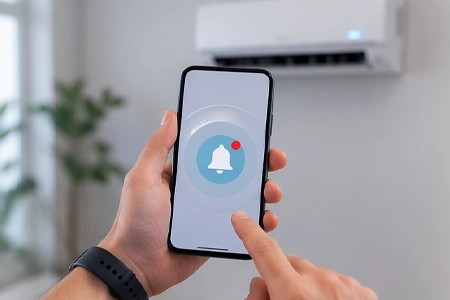
Check for Smart App Alerts
If you are using a newer smart aircond, open the brand app first before doing anything else. Some models can show error notifications, usage data, or maintenance-related alerts that help identify the issue earlier. Panasonic Comfort Cloud includes features such as remote control, monitoring, and error-related functions depending on model support, while Daikin Malaysia also offers smart-control-enabled inverter units.
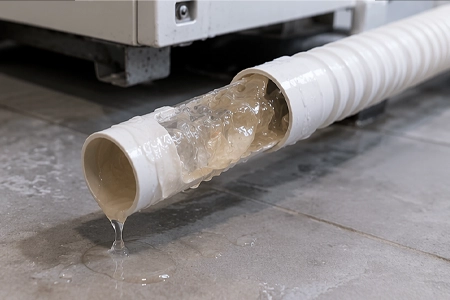
The “Jelly” Build-Up in the Drain Pipe
One of the most common causes of leaking aircond units in Malaysia is the slimy sludge that builds up inside the drain pipe. In hot and humid conditions, dust, moisture, and microbial growth combine to form a jelly-like blockage. Once the water cannot exit normally, it starts overflowing back into the unit.
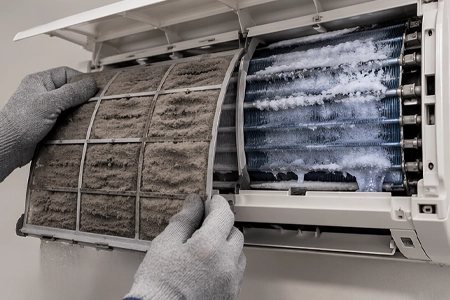
Dirty Filters and Frozen Coils
When the filter is too dirty, airflow drops. That can cause the evaporator coil to become too cold and freeze. When the ice melts later, the water volume may overwhelm the drainage system and leak indoors.
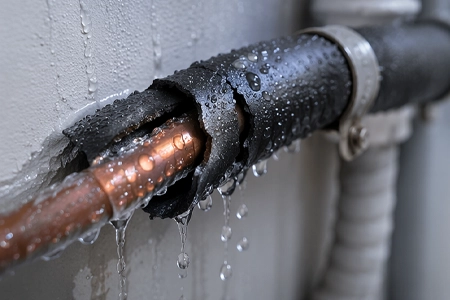
Sweating Pipes and Worn Insulation
Sometimes the issue is not inside the indoor unit at all. Old or damaged armaflex insulation around the refrigerant pipes can cause “sweating,” especially in humid homes, condos, and hot ceiling spaces. That dripping water is often mistaken for an indoor aircond leak.
DIY Fixes for Homeowner
Before calling a technician, there are a few safe checks you can do yourself.
Step 1: Do a Smart Reset
Turn off the aircond completely and leave it off for a few minutes. If your model supports app monitoring or self-diagnosis, check for any warning, maintenance, or error message before restarting. Panasonic documents app-based features and device-related notifications on Comfort Cloud-supported setups.
Step 2: Wash the Filters Gently
Remove the filters and rinse them with water. If needed, use mild or pH-neutral soap. Avoid harsh chemicals or aggressive scrubbing, especially on newer models with coated components. Let the filters dry fully before reinstalling them.
Step 3: Check the Drain Outlet
Go to the drain pipe outlet outside your house, balcony, or service yard. If there is little or no water flow while the aircond is running, the drain line may be blocked.
Step 4: Vacuum the Drain Line
A common home fix is to use a wet vacuum on the drain outlet to pull out sludge or blockage. This can work well for terrace houses and condos where the drain outlet is easy to access.
Step 5: Inspect for Pipe Sweating
If you notice water droplets forming around exposed copper piping or the wall opening, the insulation may be worn out and need replacement.
Repair vs. Upgrade: The Dilemma
Not every leaking aircond should be repaired.
If your unit is still relatively new, cools properly, and only has a drainage or cleaning issue, a repair usually makes sense. But if your aircond is more than 7 years old, is non-inverter, uses older refrigerant systems, leaks repeatedly, or struggles to cool efficiently, upgrading may be the smarter long-term choice.
That is even more relevant now because Malaysia has officially implemented its new ST star-rating schedule for air conditioners from 1 January 2026 to 31 December 2029. Consumers are increasingly comparing units based on efficiency, smart features, and long-term electricity usage, not just purchase price.
Many current Malaysia-market models also combine features such as:
- Inverter technology
- R32 refrigerant
- Smart control connectivity
- Higher energy-efficiency ratings
Daikin Malaysia currently lists multiple inverter R32 models, while Panasonic Malaysia promotes connected aircond control and energy monitoring through Comfort Cloud.
At Sifu Engineering, our advice is simple: if you are paying to fix leaks again and again on an old unit, that money may be better put toward a newer energy-efficient aircond that cools better, wastes less electricity, and fits today’s smart-home lifestyle. You can also compare expected running costs with the Aircond Electricity Cost Calculator before deciding.
The New 5-Star Standard in Malaysia
In 2026, shoppers are paying closer attention to the ST energy label on aircond units. The new schedule reflects Malaysia’s tighter energy-efficiency direction, and ST also provides product certification and efficiency information under its regulated framework.
When comparing a repair against a replacement, it is worth checking:
- The current energy rating of your unit
- Whether the model is inverter or non-inverter
- If it uses R32 refrigerant
- Whether it supports smart monitoring or app control
- How often it has needed service in the past 12 months
A leak in an old, low-efficiency aircond is often a sign that the unit is becoming more expensive to keep.
Professional Solutions: Clean & Green Aircond Service
Aircond leaking problems should be fixed at the source, not just patched temporarily. A proper service approach looks at the full system to identify what is causing the leak and restore smooth, reliable performance.
Hydro-Pressure Cleaning
Dirt, sludge, and blockages inside the drainage system and indoor components are cleared so condensation can drain out properly again.
Eco-Conscious Cleaning Approach
Modern airconds, especially inverter and R32 systems, require careful handling. Cleaning should restore performance effectively without excessive use of harsh chemicals.
Sensor and System Diagnostics
For smart-enabled units, app alerts, operating symptoms, and system behaviour can be checked together to identify whether the issue is linked to airflow, drainage, sensors, or installation.
Condensate Pump Checks
For condo and high-rise installations, the condensate pump and drainage route should be checked to ensure water is being discharged correctly.
Re-Insulation Work
If leaking is caused by sweating pipes, damaged or worn insulation can be replaced to prevent recurring moisture issues.
When You Should Call Sifu Engineering Immediately
Book a professional check if:
- Your air conditioner keeps leaking after filter cleaning
- The leak returns every few weeks
- The unit is freezing before leaking
- The water is coming from the wall opening or pipe area
- Your condo unit uses a condensate pump
- Your air conditioner is old, and your electricity bill has been rising
Protect Your Cooling, Comfort, and Electricity Bill
A leaking aircond is usually the first visible sign that something deeper is wrong. It may be a blocked drain, dirty filter, worn insulation, or an aging system that is no longer worth patching.
At Sifu Engineering, we help Malaysian homeowners diagnose leaks quickly, fix the real cause, and decide honestly whether repair or upgrade makes better financial sense. In today’s market, keeping your aircond running efficiently is not just about comfort, it is also about energy savings, smarter home maintenance, and reducing waste under Malaysia’s newer efficiency standards.
Don’t let a leak ruin your comfort or your efficiency. Book a slot with Sifu Engineering today, or browse the latest recommendations for energy-saving air conditioners.
Frequently Asked Questions About Aircond Leaking Water in Malaysia
Why is my aircond leaking water indoors?
Usually because the drain line is clogged, the filter is dirty, the coil is freezing, the insulation is sweating, or the drainage route is not working properly.
Is a leaking aircond dangerous?
It can become a bigger problem if ignored. Water can stain walls, damage ceilings, affect nearby electrical points, and reduce cooling performance.
Can I fix a leaking aircond myself?
You can do basic checks like cleaning the filter, checking the drain outlet, and noting any app or remote error code. But repeated leaking, ice formation, or pump-related issues should be handled by a technician.
Should I repair or replace my leaking aircond?
If the unit is newer and the leak is caused by dirt or blockage, repair is usually worth it. If it is old, inefficient, non-inverter, or leaks again and again, replacement may save more in the long run.
Do newer 5-star models really help?
Newer inverter models are built around stronger energy-efficiency positioning, and Malaysia’s ST framework now uses the updated 2026–2029 star-rating schedule. Many current models also combine smart control, error alerts, and R32 refrigerant.
