

If you’ve shopped for an air conditioner, refrigerator, washing machine, fan, or TV, you’ve probably seen a sticker showing stars and numbers. Many Malaysians recognise the sticker, but not everyone truly understands what it means.
This sticker is the Government Energy Efficiency Label under the Energy Commission (Suruhanjaya Tenaga). Its purpose is to help consumers choose energy-saving appliances, reduce the electricity bill burden, encourage manufacturers to meet energy-efficient standards, and support Malaysia’s long-term sustainability goals.
And when it comes to air conditioners, this label becomes extremely important because aircond units are one of the top 3 highest electricity-consuming appliances in Malaysian homes.
⭐ What Is the Government Energy Efficiency Label?
The government energy label tells you how energy-efficient an appliance is, based on a 1–5 star rating.
More stars = More energy efficient = Lower electricity bill
The rating is backed by a testing system called the Energy Efficiency (MEPS) Standard, which manufacturers must comply with before selling electrical appliances in Malaysia.
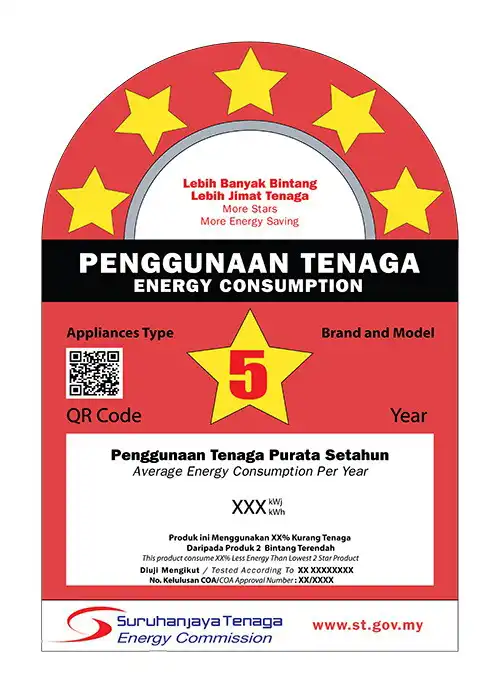
What Does the Label Show?
The label contains the following, which makes it easier for consumers to compare appliances before buying:
⭐ Energy Rating (1–5 stars)
⚡ Estimated Annual Electricity Consumption
🏭 Manufacturer & Model
📏 Test Method Standard (e.g., MS ISO ratings)
🧪 Energy Commission Approval Number
Energy Labels for Air Conditioners: What Malaysians Must Know
Air conditioning accounts for 40–60% of a home’s monthly TNB bill, especially in hot climates like Malaysia. This makes choosing an energy-efficient aircond one of the smartest decisions a Malaysian homeowner can make.
Understanding how energy labels, horsepower sizing, and technical ratings work will help you save money and enjoy better cooling performance.
Inverter vs Non-Inverter: How Does Energy Efficiency Differ?
If your priority is lower monthly electricity bills and longer-lasting performance, an inverter aircond with a higher star rating is the best choice. Below is a simplified explanation. For a more detailed breakdown, please read our full article: Difference Between Inverter vs Non-Inverter Air Conditioners
| Inverter Aircond | Non-Inverter Aircond |
|
|
Horsepower (HP) & Efficiency: Bigger Is Not Always Better
Many Malaysians assume that a higher horsepower (HP) air conditioner means better cooling. However, choosing the wrong size can lead to higher electricity bills and reduced comfort. Here’s our recommended aircond size for different room types in Malaysia:
| Room Size | Recommended HP |
| 100–150 sq ft | 1.0 HP |
| 150–200 sq ft | 1.5 HP |
| 200–300 sq ft | 2.0 HP |
| Large Living Room | 2.5 HP |
EER & CSPF: The Technical Measurements Behind the Star Rating
Malaysia’s energy labels are based on two important technical values:
🔵 EER (Energy Efficiency Ratio): Used for non-inverter airconds
🔵 CSPF (Cooling Seasonal Performance Factor): Used for inverter airconds
EER measures cooling efficiency at a fixed condition, while CSPF measures performance throughout different cooling loads, making it more accurate for inverter technology. Hence, it means:
🔵 Higher EER or CSPF = Lower electricity usage
🔵 Higher efficiency = Higher star rating
To ensure accuracy and consumer safety, all manufacturers must test their air conditioners in accredited laboratories approved by Suruhanjaya Tenaga (Energy Commission Malaysia). This ensures the star ratings you see in stores and online are reliable and consistent across brands.
Energy Labels for Other Electrical Appliances
Energy labels aren’t just for air conditioners, they apply to many household appliances. Understanding them can help you save money across the home.
- Refrigerators – A 5-star fridge uses less electricity, saving you money each year; check size, insulation, and compressor type.
- Washing Machines – Higher-rated front-load machines use less water and electricity while spinning clothes efficiently.
- Televisions – Energy-efficient LED or OLED TVs consume significantly less power than low-star models.
- Fans – Efficient DC fans can use up to 70% less electricity than standard fans while keeping you cool.
Why Malaysians Should Care About Energy Labels
Most Malaysians glance at the star rating when buying an aircond or fridge, but few truly understand how much it impacts their monthly expenses, cooling comfort, long-term savings, and even the value of their home.
The Energy Efficiency Label is not just a sticker. It is a financial tool, a performance indicator, and a protection system designed to help Malaysian consumers make more informed purchasing decisions.
Below is a deeper, easy-to-understand breakdown of why the star rating matters more than ever.

1. Save More Money on Your Monthly TNB Bill
Have you ever wondered how much electricity your air conditioner consumes? Energy labels make it easy for Malaysians to identify appliances that use less power. Since air conditioners account for a significant portion of household energy consumption, opting for a 4-star or 5-star unit can noticeably lower your monthly TNB bills. Over the course of a year, these savings add up, especially in Malaysian homes where multiple air conditioners run daily in the country’s hot and humid climate.

2. Better Cooling Performance & Longer Lifespan
Higher-rated appliances are built with better components, allowing them to run more efficiently and with less strain. For airconds, this means faster cooling, more stable temperatures, and quieter operation. Because the compressor doesn’t work as hard, the overall system lasts longer and requires fewer repairs, giving homeowners better performance and long-term reliability.

3. Reduces Carbon Emissions
Energy-efficient appliances consume less power, which directly lowers Malaysia’s overall energy demand. Since much of our electricity still comes from fossil fuels, choosing higher-rated airconds and electrical appliances helps reduce carbon emissions. This supports Malaysia’s long-term environmental goals and contributes to a cleaner, more sustainable future without requiring major lifestyle changes.

4. Protection Against Rising Electricity Tariffs
Electricity tariffs may adjust over time due to global fuel prices and national energy policies. Appliances with higher energy ratings use less electricity from the start, helping households stay protected against potential tariff increases. Even small reductions in daily consumption add up, making efficient appliances a smart long-term financial choice for Malaysians.

5. Adds Value to Homes and Rentals
Energy-efficient appliances are now a selling point for Malaysian homes and rental properties. Buyers and tenants appreciate lower electricity bills and appliances that last longer with fewer issues. For Airbnb and rental units, efficient airconds are especially important because they reduce operational costs. A home equipped with high-rated appliances naturally becomes more attractive and valuable.
Conclusion: Choose Smart, Save More
Government energy labels help Malaysians make smarter decisions when selecting appliances that reduce electricity use and lower monthly TNB bills. Since air conditioners are among the highest energy consumers at home, choosing a 4-star or 5-star inverter aircond can significantly reduce long-term costs while providing stronger cooling and better overall performance.
By understanding how these energy labels work, you’ll enjoy lower electricity bills, improved comfort, and a more eco-friendly home. If you’re planning to upgrade or install a new air conditioner, investing in an energy-efficient inverter model is a smart decision that delivers long-lasting savings.
Ready to enjoy better cooling with lower bills? Reach out to Sifu Engineering today for the best aircond deals in Malaysia!
FAQs: Common Questions Related to Energy Efficiency Label
What’s the difference between MEPS and the star rating?
MEPS sets minimum acceptable efficiency levels for appliances (a regulatory floor).
Star rating shows relative efficiency above that minimum; higher stars indicate better performance under the test standard.
What is the minimum star rating allowed in Malaysia?
MEPS ensures that only energy-efficient models reach the market. In practice, most air conditioners sold in Malaysia today start at 2 stars or higher, meaning they meet basic efficiency standards.
Do I need a 5-star air-con to save money?
Not necessarily. While a 5-star air conditioner uses the least electricity, actual savings depend on your usage pattern, electricity tariff, and the price difference between models. Calculate using the label’s kWh/year × your tariff, then compare to the price premium.
Does installation affect energy efficiency?
Yes. Proper installation is crucial for achieving the performance shown on the energy label. Even a 5-star aircond may waste electricity if installed poorly. A professional installer ensures correct airflow and system calibration so your aircond cools efficiently without overworking the compressor.
How do I check if my appliance is approved by the Energy Commission?
Look for Suruhanjaya Tenaga logo, Approval number, and 1–5 star sticker. You can also search the product model in the ST product database.
Are 5-star appliances more expensive?
Yes, but they save more money long-term, especially airconds and fridges.
